
Interview video production Wales
Interview video production Wales
Natural answers. Professional pictures and sound
Interview filming for businesses, public bodies, charities and production teams across Cardiff, Newport, Swansea and the wider Welsh region. From one leadership message to a full day of customer or case-study interviews, the setup is planned around the people, the room and the finished edit.
Interview videos
From brief to final edit
Interview filming built around people
Make contributors comfortable and give the edit something useful to work with
South Wales Video films interviews for corporate communications, public-sector projects, documentaries, case studies, recruitment campaigns and behind-the-scenes productions.
Contributors range from business leaders and clinicians to engineers, tradespeople, actors and members of the public. Some know exactly what they want to say; others need a calm explanation, a few warm-up questions and permission to try an answer again.
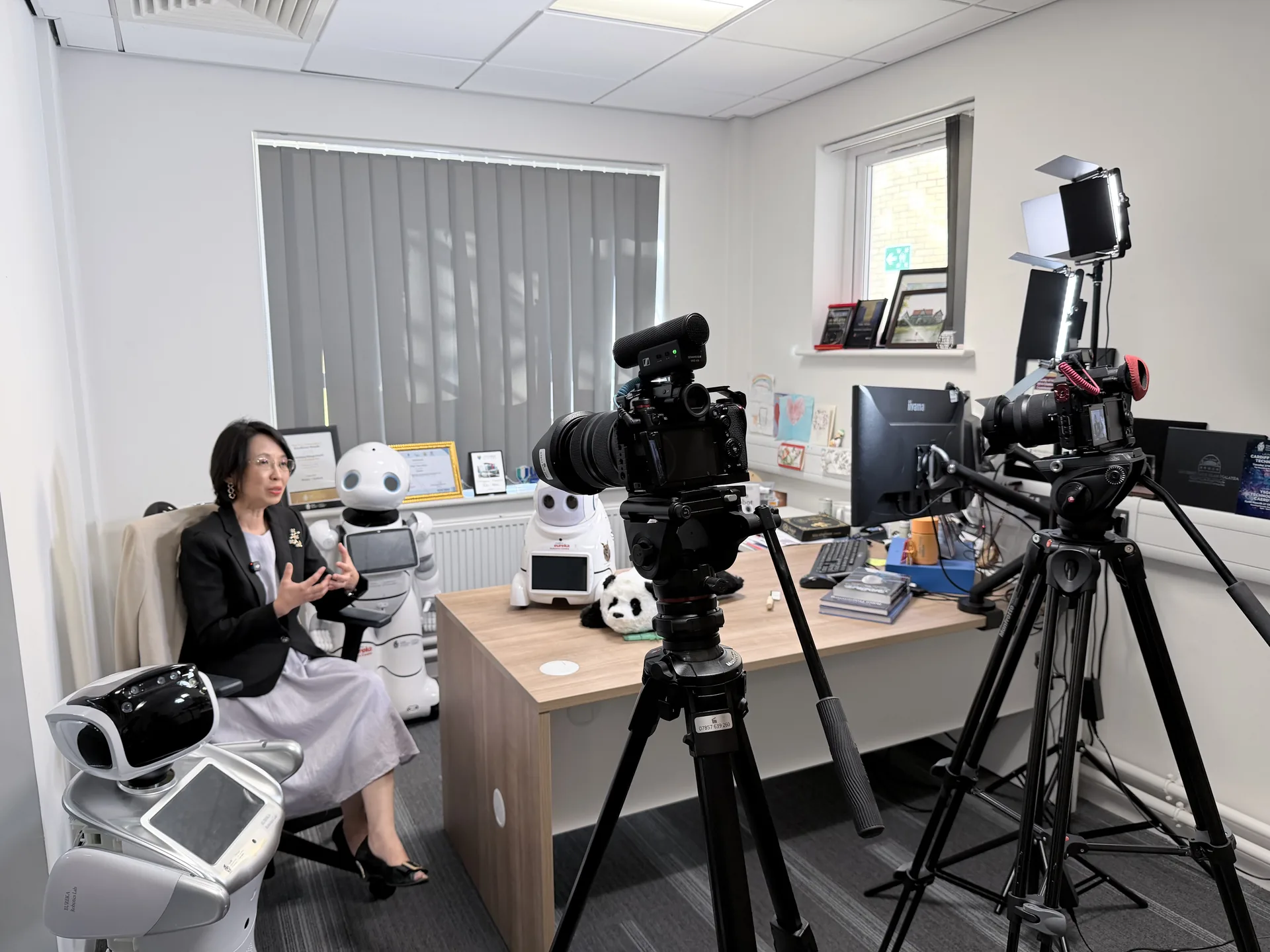
Mark directs the conversation while the cameras, lighting and sound are handled around the speaker. Your marketing manager can ask the questions, they can be supplied in advance, or we can lead them. Autocue is available when wording must be exact.
Interview formats
Choose a setup that suits the message
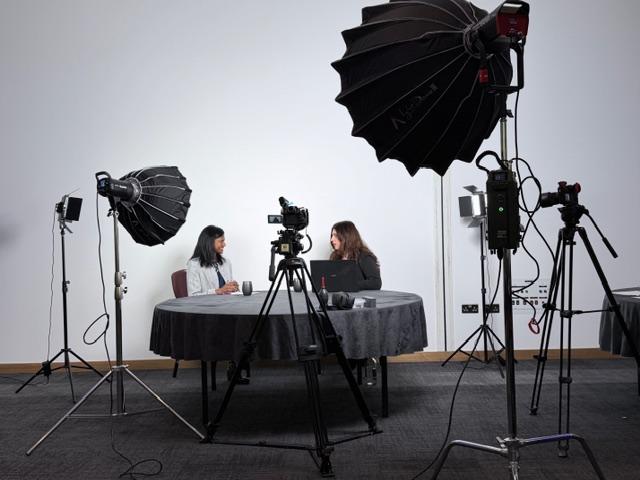
Two-camera seated interviews
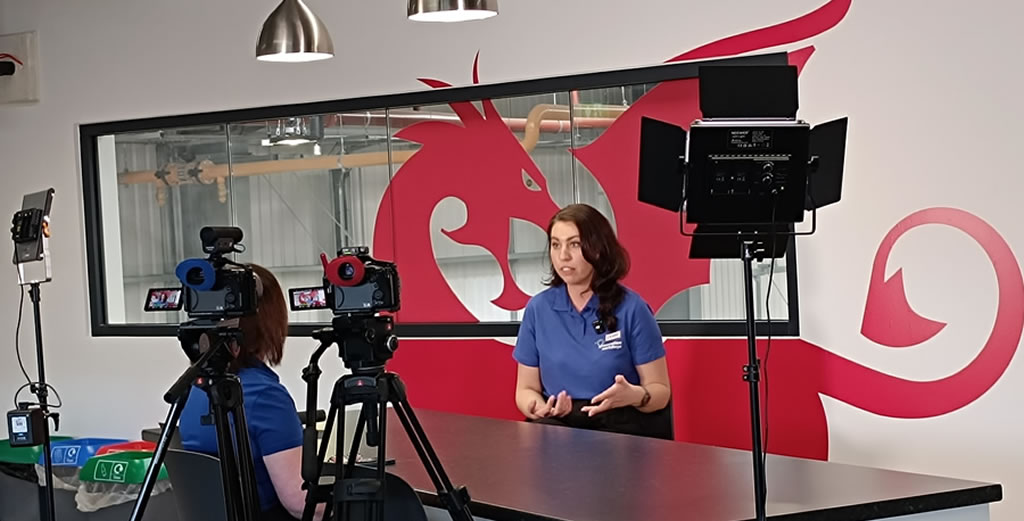
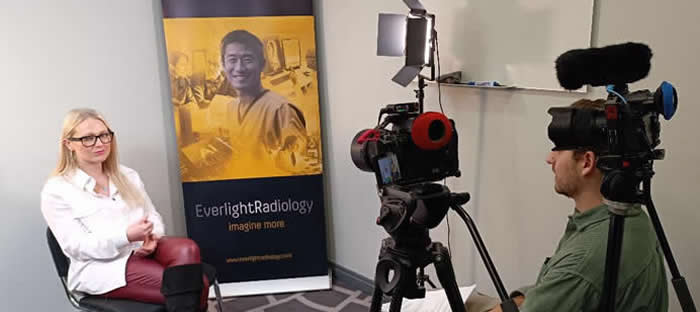
Useful for leadership messages, customer testimonials and longer answers. The second angle gives the edit a natural way to shorten an answer without an obvious jump.
Standing, walk-and-talk and workplace pieces
Useful when the setting needs to stay active around the contributor, including site updates, demonstrations and event interviews.
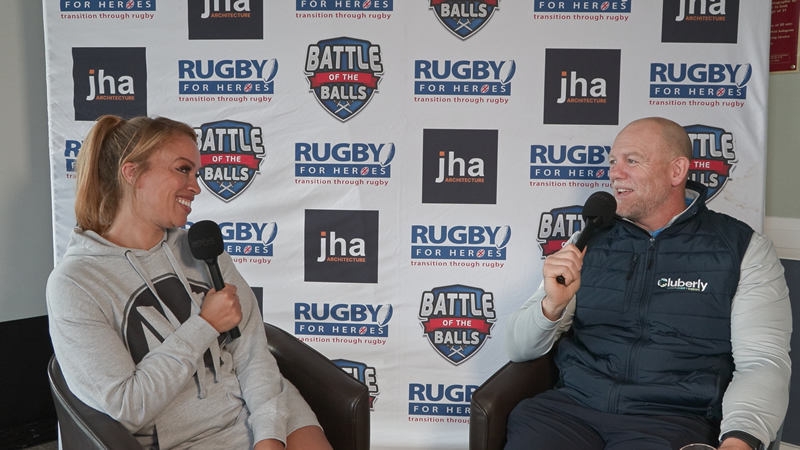
Interviewer, prompts or autocue
Your interviewer can sit beside the lens, join remotely or supply questions. Autocue is available for exact statements and technical wording.
Interview footage can also become part of a case-study video, recruitment film or internal communications video.
Interview-led examples
See how interviews work inside a finished story
Business stories, expert commentary and customer experiences each need their own pace, framing and supporting pictures.
Interview-led business story
Structured around a clear message with supporting footage carrying the edit.
Customer and service story
Natural answers combined with practical footage of the work itself.
Before filming
Plan the interview around the edit, not just the questions
We start with what the audience needs to understand, what action the film should support and where the finished material will be used. That determines the questions, answer length, framing and whether each contributor needs a separate edit.
Questions are normally arranged as themes rather than model answers. We remove repetition, ask for specific examples, changes or results, and identify the answers that will need supporting workplace footage.
A supporting shot list is prepared at the same time so the finished film can show the people, workplace, products or processes being discussed rather than relying on one continuous talking head.
On location in Wales
The room matters more than simply bringing more kit
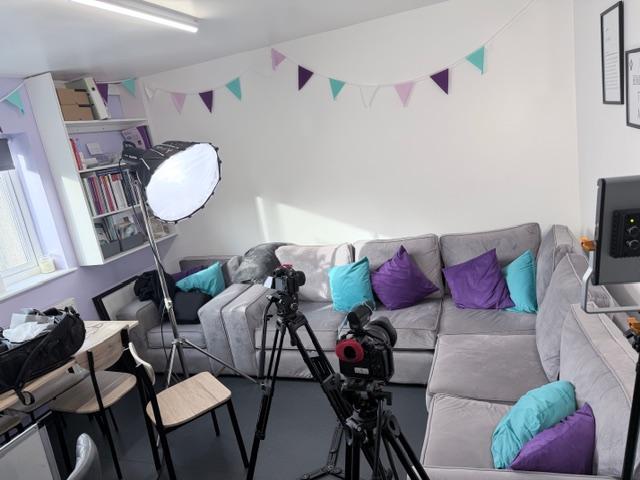
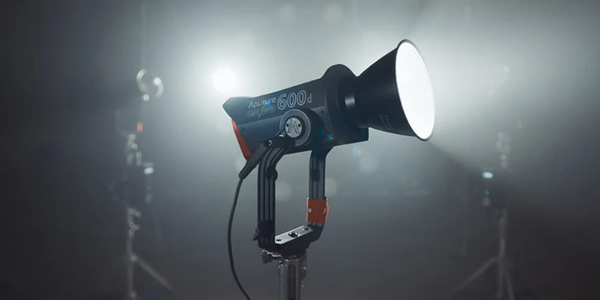
We film in offices, factories, hospitals, universities, hotels, homes, studios and event venues. Before setting up, we check room depth, background detail, window light, ventilation noise, traffic, power and how long the space is available.
A larger, quieter room usually gives more control than a small boardroom. It creates space between the speaker and the background, allows a second camera and keeps lighting and sound equipment away from the contributor.
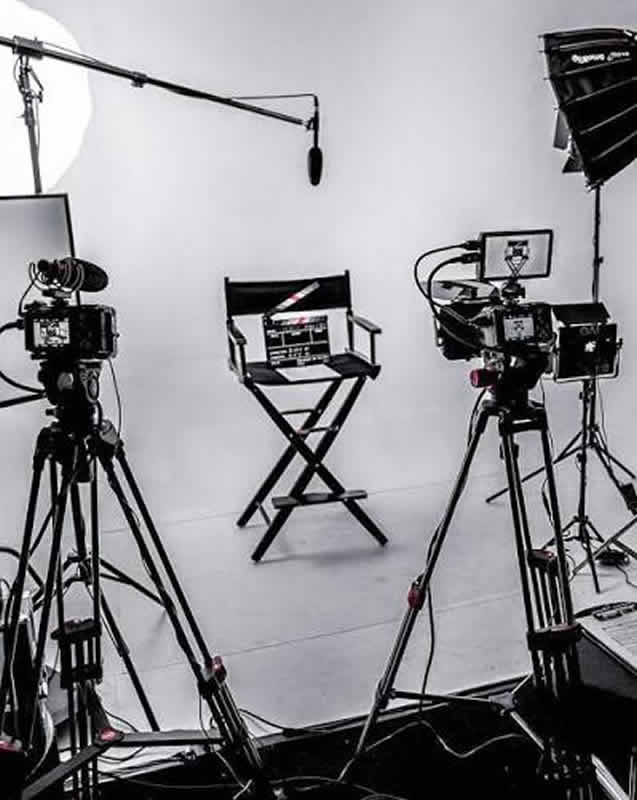
A carefully lit two-camera interview normally needs around 60 to 120 minutes before the first contributor. If the booked room is not suitable, a nearby meeting room, studio or quiet client space can be a better choice.
Where the day also includes case-study filming, workplace activity and B-roll are scheduled around the interviews.
How it works
A practical route from brief to delivery
1Define the job
Set the audience, purpose, contributors, locations, deadlines and final versions before building the filming plan.
2Prepare the people
Share themes rather than model answers, identify nervous speakers and decide whether an interviewer, prompts or autocue will help.
3Film the story
Record the interview and the people, processes and location detail the edit needs.
4Shape and supply
Find the strongest answers, remove repetition and add names, branding, captions and agreed landscape or vertical versions.
Interview video pricing
Clear starting points, then a quote to the brief
A professionally lit two-camera interview shoot starts from £695. A full-day interview-led shoot with B-roll is typically £1,300.
Interview filming — from £695
Up to four hours on location, two 4K cameras, professional lighting and sound, interview filming and clearly organised footage.
Interview + B-roll — from £1,300
Up to eight hours on location, interviews and supporting 4K footage, professional edit, licensed music, names, branding, captions and revision allowance.
Several locations, extra crew, extensive lighting, specialist sound, studio hire, hair and make-up, autocue, drone, photography or additional versions are quoted separately.
Across Wales
Interview filming across Wales
Based in South Wales, we regularly film interviews in Cardiff and the Vale, Newport and Monmouthshire, Swansea and Neath Port Talbot and Bridgend.
We also work across Brecon and Powys, Pembrokeshire, the Valleys, Carmarthenshire and elsewhere in Wales. Travel, access, contributor numbers and the filming schedule are agreed before booking.
Our wider production work covers business, public services, education, healthcare, construction, events and screen production.
Interview video FAQs
Useful questions before booking
The practical details below are the ones most likely to affect the filming day, contributor experience and edit.
How long should we allow for setup and one interview?
A carefully lit two-camera setup usually needs 60–120 minutes before the first contributor. We also allow a few minutes for microphones, framing and a relaxed conversation before recording.
Can you provide an autocue?
Yes. Autocue is useful for exact leadership statements, announcements and technical wording. Guided questions are usually better for customer stories and case studies where a natural answer matters more than exact phrasing.
Can interviews and B-roll be filmed together?
Yes. Interviews and supporting footage are often filmed on the same day. The schedule is planned so workplace activity, products, processes and people can be recorded while they are available. See our case-study video production.
How do you help nervous speakers?
We explain the setup, start with easy questions and keep unnecessary people out of the room. Contributors can pause, repeat an answer and try a different wording. Only the strongest material appears in the finished edit.
How many contributors can be filmed in a day?
With one set left in position, four to six contributors can often be filmed comfortably in a day. The number falls when interviews are long, rooms change or each person needs a different setup.
Plan the interview
Tell us who is speaking and what the audience needs to understand
Send the location, likely contributors, intended use and preferred filming date. We will suggest the most useful setup and confirm the filming time, crew and cost.