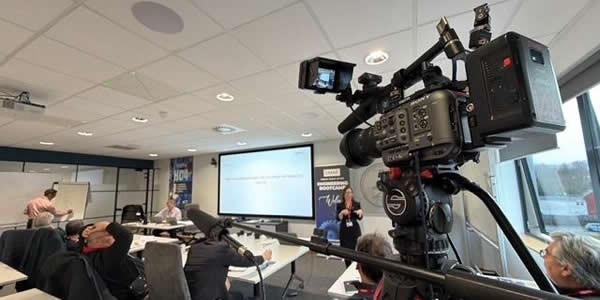
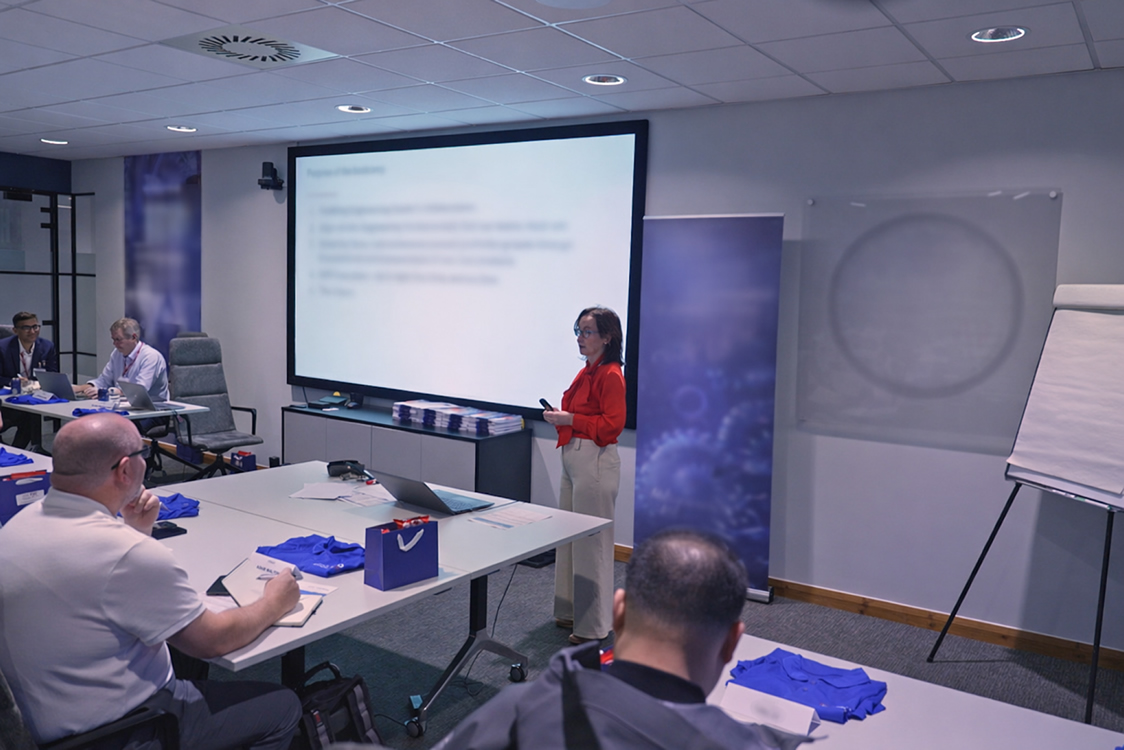
At South Wales Video, we recently captured a multi-day technical bootcamp: eight intensive hours per day of lectures, discussions, and 50/50 audience participation, with minimal breaks and a tight operational schedule. The original brief was straightforward—full archival documentation for internal training reference. We delivered over 28 hours of high-quality, complete recordings exactly as commissioned.
Post-event, the project evolved significantly. The client (who had planned to handle editing themselves) requested urgent promotional highlights, cleaned lecture excerpts for international teams, sound cleanup, break removal, and noise reduction. This shift came after delivery, once filming was complete and no further capture was possible.
How we adapted creatively We made the most of the available footage:
- Offered to return to site for drone establishing shots of the venue exterior to add polish.
- Built the highlights reel using captured interviews, overlaid with muted lecture segments for visual context and flow.
- Skipped unsuitable material (e.g., rushed lunch breaks where filming participants eating wouldn’t be appropriate).
The outcome? A functional, energetic short piece that conveys key moments—despite originating from pure documentation material.
Documentation vs. promotional highlights: Different needs from day one
Archival capture prioritises:
- Full session coverage
- Clear presenter audio (lav mic focused)
- Slide visibility
- Uninterrupted continuity
Promotional highlights thrive on:
- Atmosphere and reactions
- Cutaways, transitions, and b-roll
- Curated soundbites
- Dynamic pacing and rhythm
Without dedicated time for extras during the event, these elements can’t be manufactured in post. Single-camera, observational setups (wide-angle for maximum coverage) excel at reliable reference material but naturally limit creative editing options.
Audio challenges in participatory training rooms
With lively audience questions and discussions adding real value, audio becomes trickier. We used a lavalier on the presenter and a boom for room pickup, monitoring levels live (with and without headphones) to optimise clarity. Key realities included:
- Persistent A/C hum—common in large venues.
- Turning off A/C required opening windows, but with the camera positioned nearby, this introduced noticeable traffic/roundabout noise from below.
- Back-of-room participants experienced quieter lecturer audio than those upfront; the boom was placed discreetly at the centre side of the room per strict instructions to avoid distraction.
Post-production tools (noise reduction, EQ) help significantly, but aggressive cleanup can reduce natural interaction and context. A second camera for reaction angles and additional distributed mics would have provided cleaner, more flexible audio from the outset—especially in participatory formats.
Delivery realities—and the value of planning
Handing over 28+ hours of raw footage meant large files. We compressed efficiently using HandBrake, then uploaded to a shared OneDrive folder for the overseas client. (We also provided the full set on USB for reliability.) Large transfers demand time and bandwidth; discussing compression, phased delivery, or physical media upfront avoids last-minute hurdles.
The key scope detail
A single-camera, observational setup delivered exactly what was initially scoped: reliable, comprehensive archival records. The client decision-maker explicitly declined a second camera (and additional mics), even after I explained the benefits for editing flexibility—because the footage was for internal reference only, with any minor issues to be fixed later by inserting static slides. Editing wasn’t part of the original brief or budget. However, once the event ended and materials were delivered, the scope expanded to promotional highlights, sound cleanup, and edited segments—transforming documentation into marketing assets after the fact.
Updated lessons for smoother video projects
- Clarify early: Is this pure documentation, promotional highlights, both—or could it evolve?
- If promotion is likely, allocate time for b-roll, drone shots, extra angles, or interviews.
- In participatory training, budget for a second camera and distributed mics to better capture room dynamics and acoustics.
- Discuss audio constraints upfront (A/C, ambient noise, participation levels) and agree on cleanup expectations.
- Plan delivery logistics: compression tools, phased cloud uploads, or physical media (e.g., USB) for international clients.
- Single-camera observational coverage is ideal for dependable records—not instant marketing transformation.
Final thought
Documentation preserves essential knowledge; marketing amplifies reach and impact. Both are powerful when planned with the end goal in mind. Here, we adapted creatively from strong foundations to meet the new needs—proving that solid capture early on creates real flexibility later.
Planning a bootcamp, conference, or corporate training session? Let’s discuss your goals upfront—whether reference archive, promo highlights, or hybrid. Early alignment saves time, budget, and delivers video that truly works for you.